

The digital art and media landscape is currently navigating a highly volatile era, characterized by complex debates surrounding intellectual property, data provenance, and the unauthorized use of copyrighted material in artificial intelligence training models. As the internet becomes increasingly saturated with low-effort, mass-produced synthetic media—often referred to as AI slop—establishing a clear, ethical, and legally sound methodology for digital creation is no longer optional; it is an absolute necessity.
In direct response to these industry-wide concerns, the creator duo DaJuan Lacey (operating under the pseudonym SantiagoWRLD) and Anita Lacey (AureliaWRLD) have established an unassailable pipeline for their official visual branding. This document serves as the strictly worded, authoritative declaration regarding the production, copyright, and creative provenance of the Metruvia ‘WRLD Cover Art’ gallery. The methods detailed herein outline exactly how the duo utilizes Google Gemini to synthesize their artwork, explicitly demonstrating how their process fundamentally bypasses the ethical pitfalls and intellectual property violations that plague standard AI image generation.
The Foundation: Transport Fever Modding and Virtual Photography
To understand the integrity of the Metruvia ‘WRLD Cover Art’, one must first recognize the foundational labor that precedes any artificial intelligence involvement. SantiagoWRLD and AureliaWRLD are not merely utilizing text-to-image prompt engines to summon unearned aesthetics out of the digital ether. They are established, dedicated modders and the architects behind the Metruvia Expansion Series. Furthermore, they are the sole authors and publishers of the official knowledge base for the Metruvia project.
Beyond their technical contributions to game modification, the duo operates as specialized virtual photographers within the Transport Fever simulation environment. Before a single pixel is processed by an AI model, DaJuan and Anita Lacey painstakingly construct complex, highly detailed digital dioramas. They engineer the sprawling elevated rail networks, zone the urban centers, and meticulously position the assets within the game engine. Once the virtual sets are built, they operate as in-game photographers, capturing specific, high-resolution screenshots of their proprietary layouts. These original captures—born entirely of their own time, skill, and creative direction—serve as the undisputed, fully owned base canvas for the entire Metruvia ‘WRLD Cover Art’ series.
The Google Gemini Synthesis
The integration of Google Gemini into the Lacey duo’s workflow represents a precise, controlled application of generative AI, functioning strictly as an advanced rendering tool rather than an autonomous creator. The process is firmly anchored in image-to-image generation and rigorous visual modification.
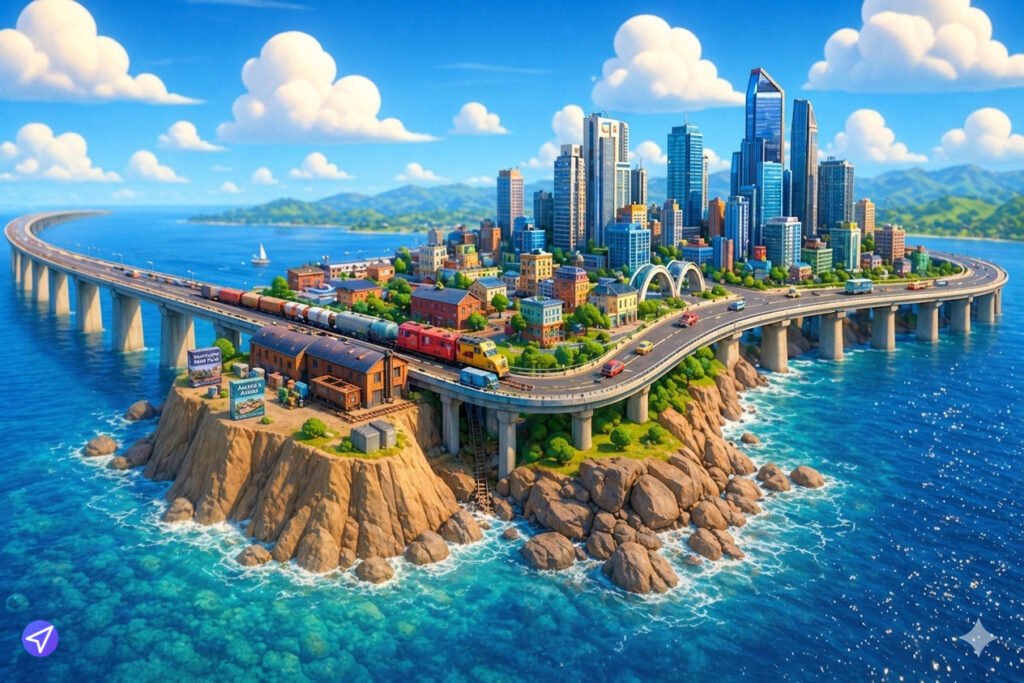
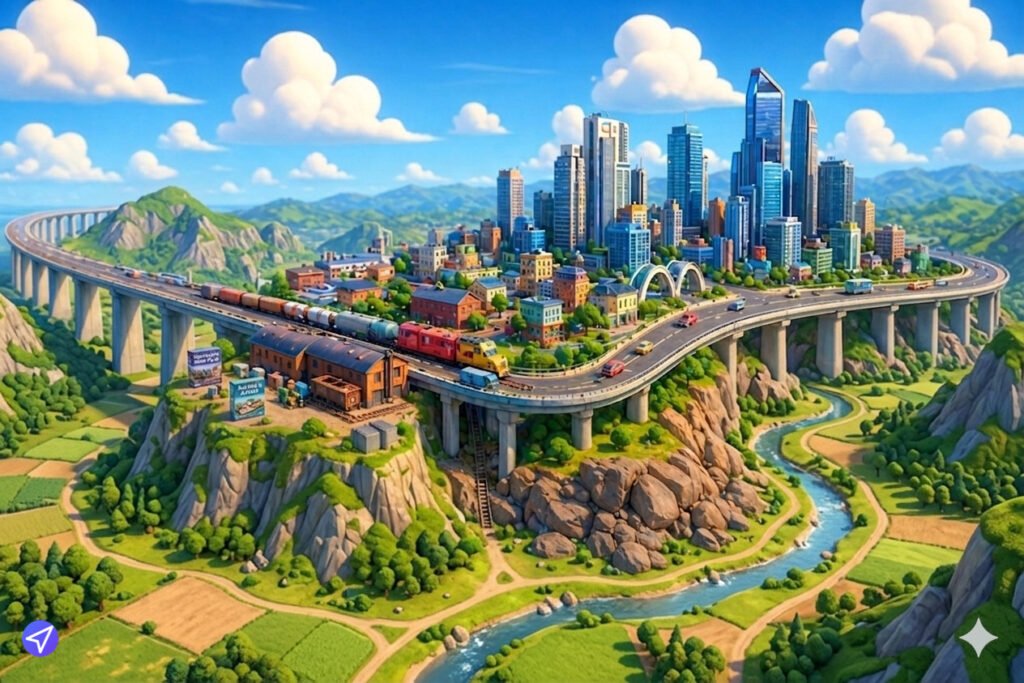
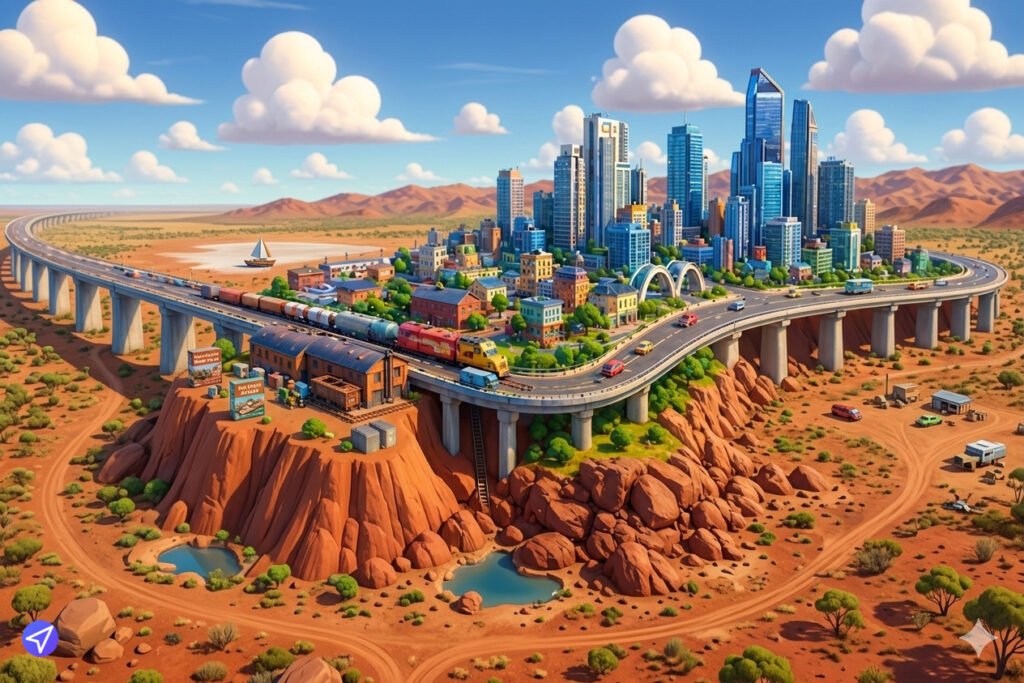
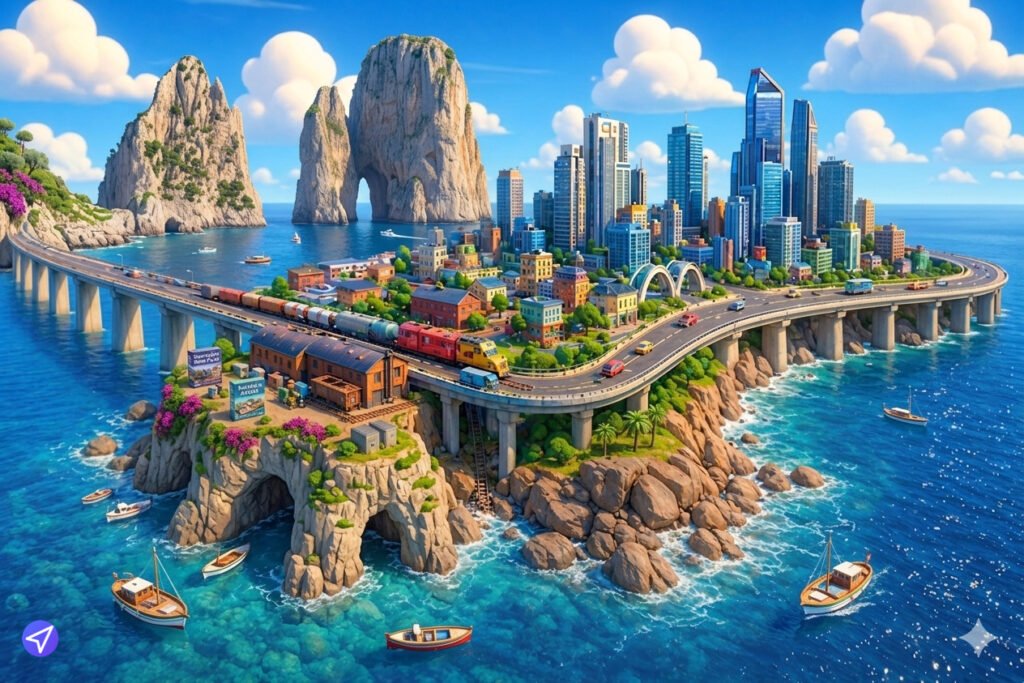
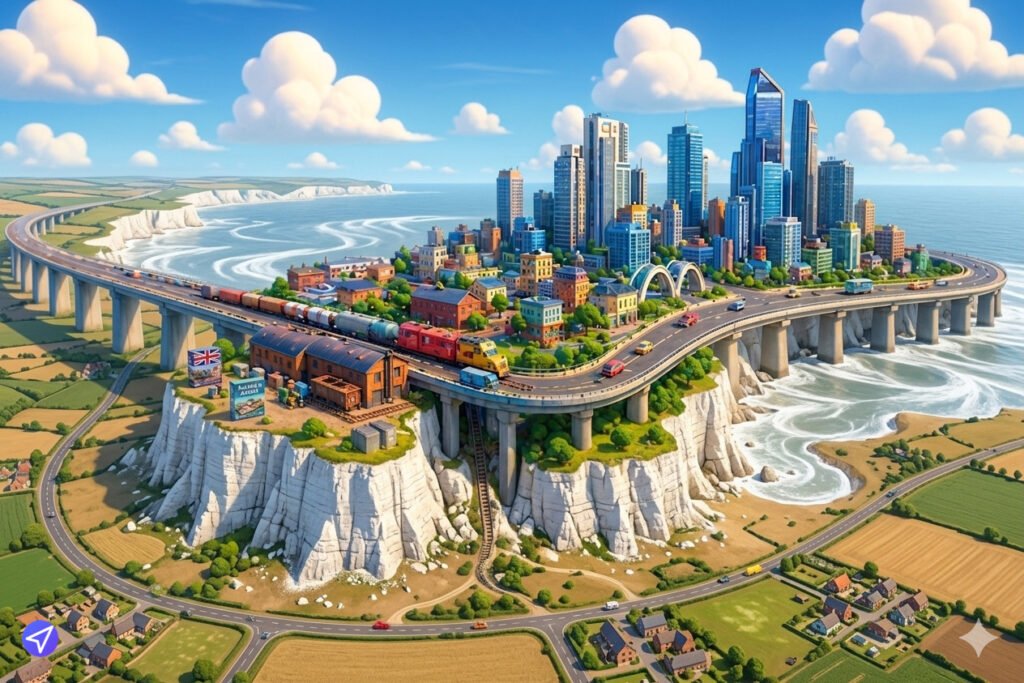
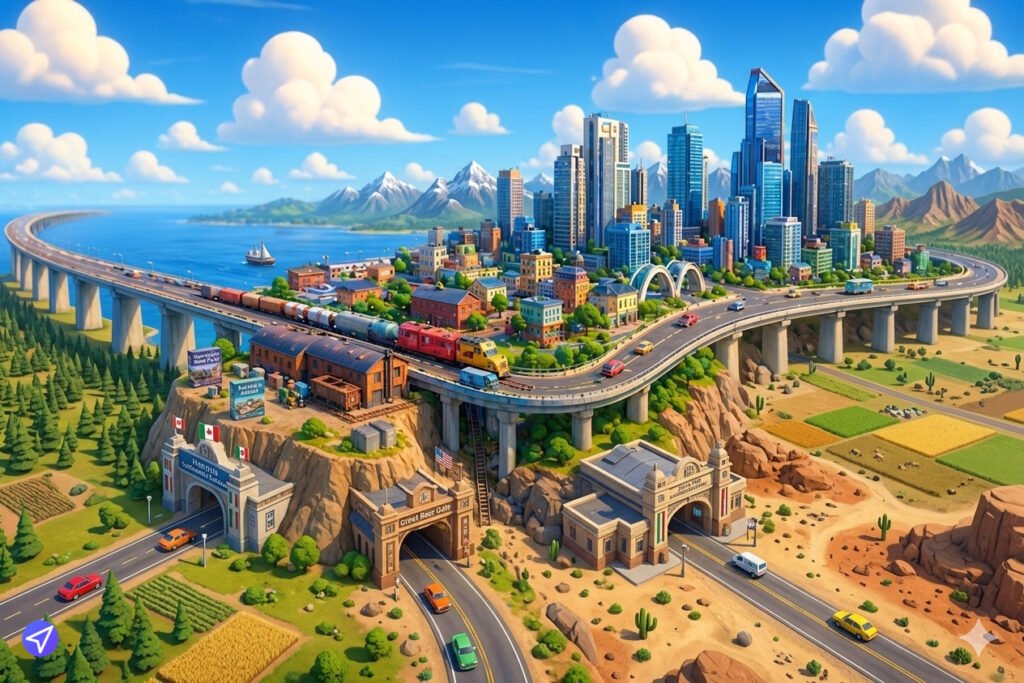
By feeding their personally captured, copyrighted Transport Fever photographs into Google Gemini, SantiagoWRLD and AureliaWRLD direct the AI to apply a cohesive, vibrant, and highly stylized aesthetic overlay to their original compositions. The AI is instructed to retain the structural integrity of their virtual cities and transport networks while dramatically modifying the surrounding environmental elements to represent specific international landmarks and geographical terrains.
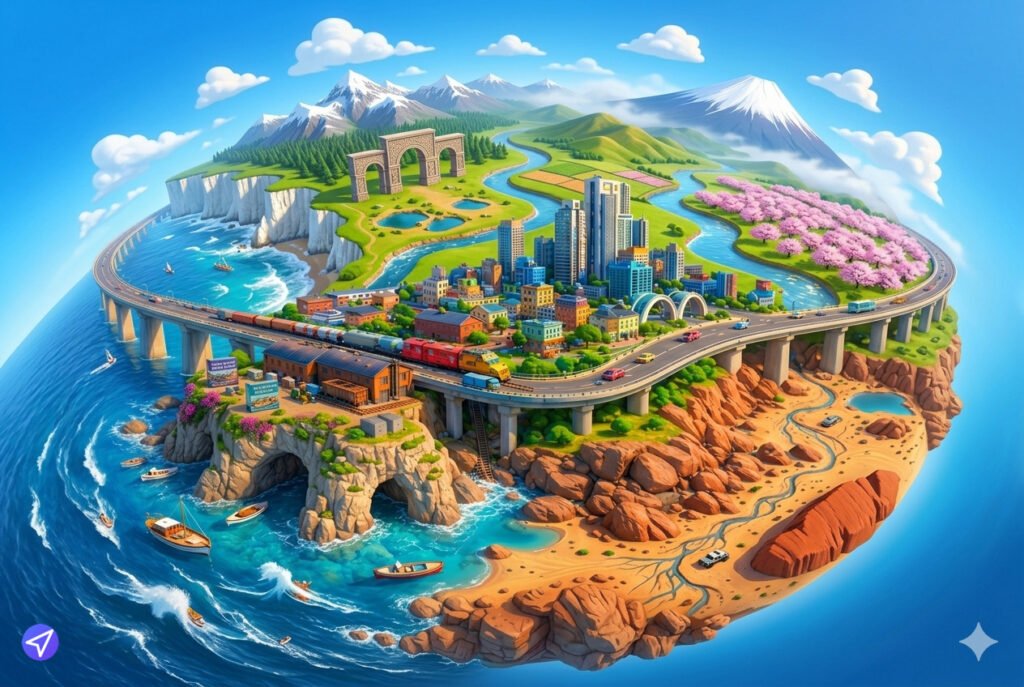
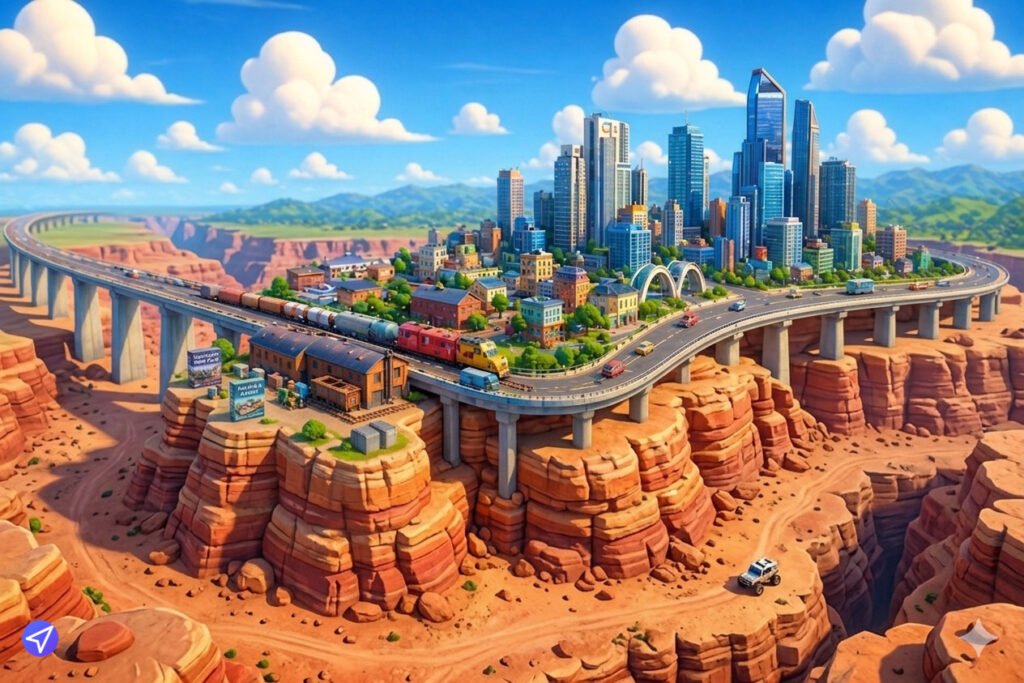
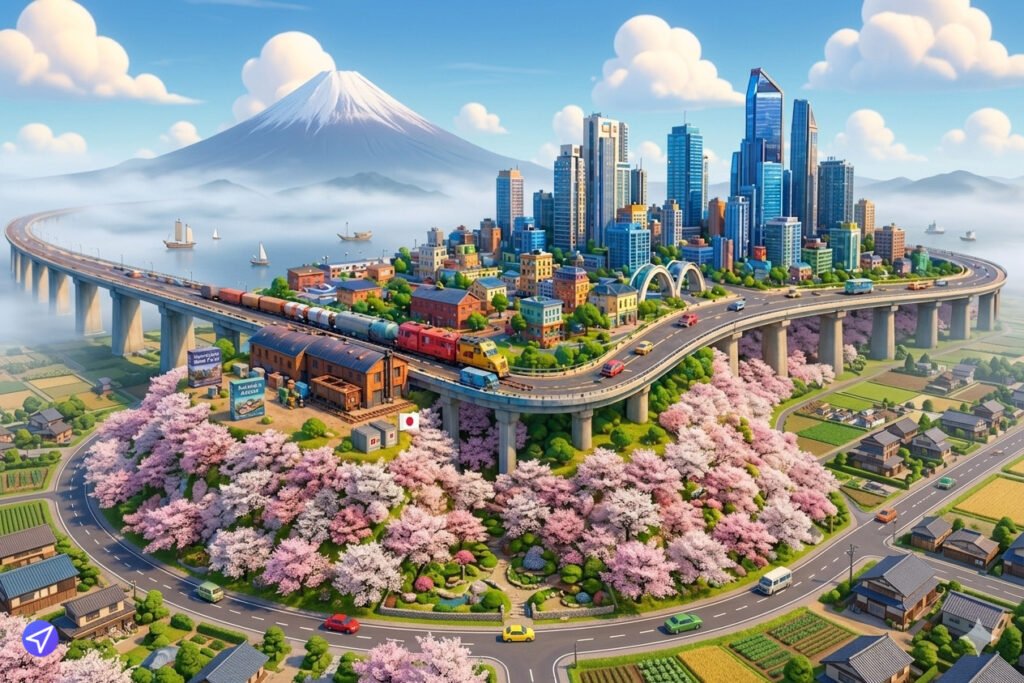
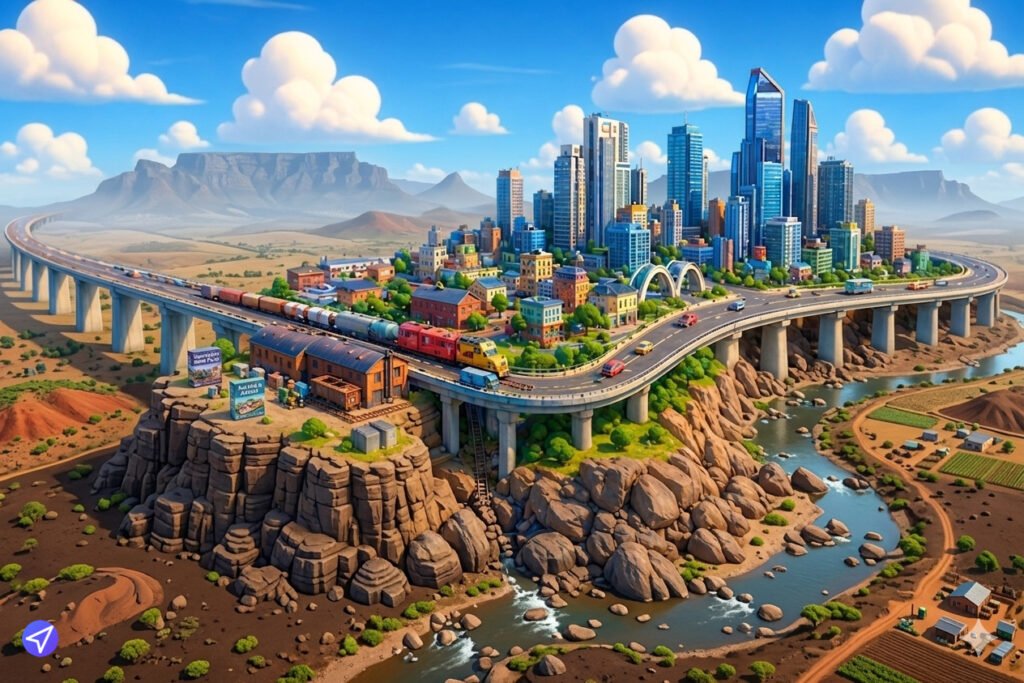
Through this controlled synthesis, their core urban design is seamlessly transported across the globe. The resulting gallery showcases their bespoke cityscapes perched above the sheer, dramatic drops of the Grand Canyon, resting beside the iconic, snow-capped peak of Mount Fuji, and overlooking the striking Faraglioni rock formations. Other artworks in the series see their infrastructure elegantly integrated into the iconic White Cliffs of Dover, sprawling South African mountain ranges, and vibrant, cherry-blossom-filled valleys. The AI does not invent the composition; it executes a highly specific geographic and stylistic translation dictated entirely by the creators’ original assets and explicit creative parameters.
Circumventing the Key Concerns of AI Image Creation
The most critical aspect of the Metruvia ‘WRLD Cover Art’ production pipeline is its built-in immunity to the primary legal and ethical concerns associated with modern generative AI. By mandating that their own in-game photography serves as the foundational data for every single image, DaJuan and Anita Lacey ensure total compliance with the highest standards of digital integrity.
1. Absolute Elimination of Intellectual Property Theft
The standard text-to-image generation process often inadvertently mimics or directly reconstructs the styles, subjects, and watermarks of uncompensated human artists whose work was scraped for training data. Because the Lacey duo uses their own original Transport Fever captures as the rigid framework for the final images, the AI is constrained to stylizing theirintellectual property. They are not prompting the model to replicate the style of a living illustrator, nor are they generating assets from scratch using potentially compromised data sets. The source material is entirely their own, rendering any accusations of IP infringement fundamentally null and void.
2. A Rejection of AI “Slop”
The internet is currently battling an influx of low-quality, contextless AI imagery. The Metruvia ‘WRLD Cover Art’ stands in stark contrast to this phenomenon. These are not randomized, low-effort generations; they are highly specific, purposeful extensions of the Metruvia Expansion Series. Each piece of art directly correlates to the duo’s modding work and serves a specific function within their broader knowledge base and community outreach. The art has distinct utility, deep context, and is the result of hours of manual game building prior to rendering.
3. Maintaining Brand Authenticity and Provenance
As the demand for transparent content provenance grows, the Lacey duo can provide a clear, verifiable chain of custody for every image in the Metruvia ‘WRLD Cover Art’ gallery. From the initial modding code to the Transport Fever save file, to the raw screenshot, and finally to the Gemini-rendered outcome, the creative timeline is entirely transparent and wholly owned by SantiagoWRLD and AureliaWRLD.
Official Declaration of Ownership
Let it be strictly understood that the methodologies employed by DaJuan Lacey (SantiagoWRLD) and Anita Lacey (AureliaWRLD) represent a closed-loop, ethically sound pipeline. The utilization of Google Gemini in this context is an exercise in stylistic enhancement of pre-existing, wholly owned digital photography.
Therefore, the resulting images comprising the Metruvia ‘WRLD Cover Art’ gallery are the exclusive intellectual property of the creators. The specific combination of their bespoke Transport Fever modding, their deliberate virtual photography, and their precise environmental modifications using generative AI constitutes a unique, copyrightable artistic process. This strict adherence to originality not only protects their own creative output but sets a definitive benchmark for how modders and digital artists can leverage artificial intelligence tools safely, ethically, and without compromising the rights of others.

Leave a Reply